Contact
Contact us
Every organization is different, and we at Offimac understand that all too well. Do you have questions or are you curious about what we can do for you? Let us know. We are happy to think along with you.

Many rental companies start small: a schedule in Excel, a few loose software tools and some mailbox appointments. But as you grow, there comes a time when the fragmentation of systems costs you more money, time and mistakes than you care to make. It’s exactly at this point that many organizations ask themselves: Do I choose a simple rental software or go straight for a full ERP system?
This article explains why an ERP solution is often the most future-proof, scalable AND cost-effective choice-even for rental companies that are not yet huge.
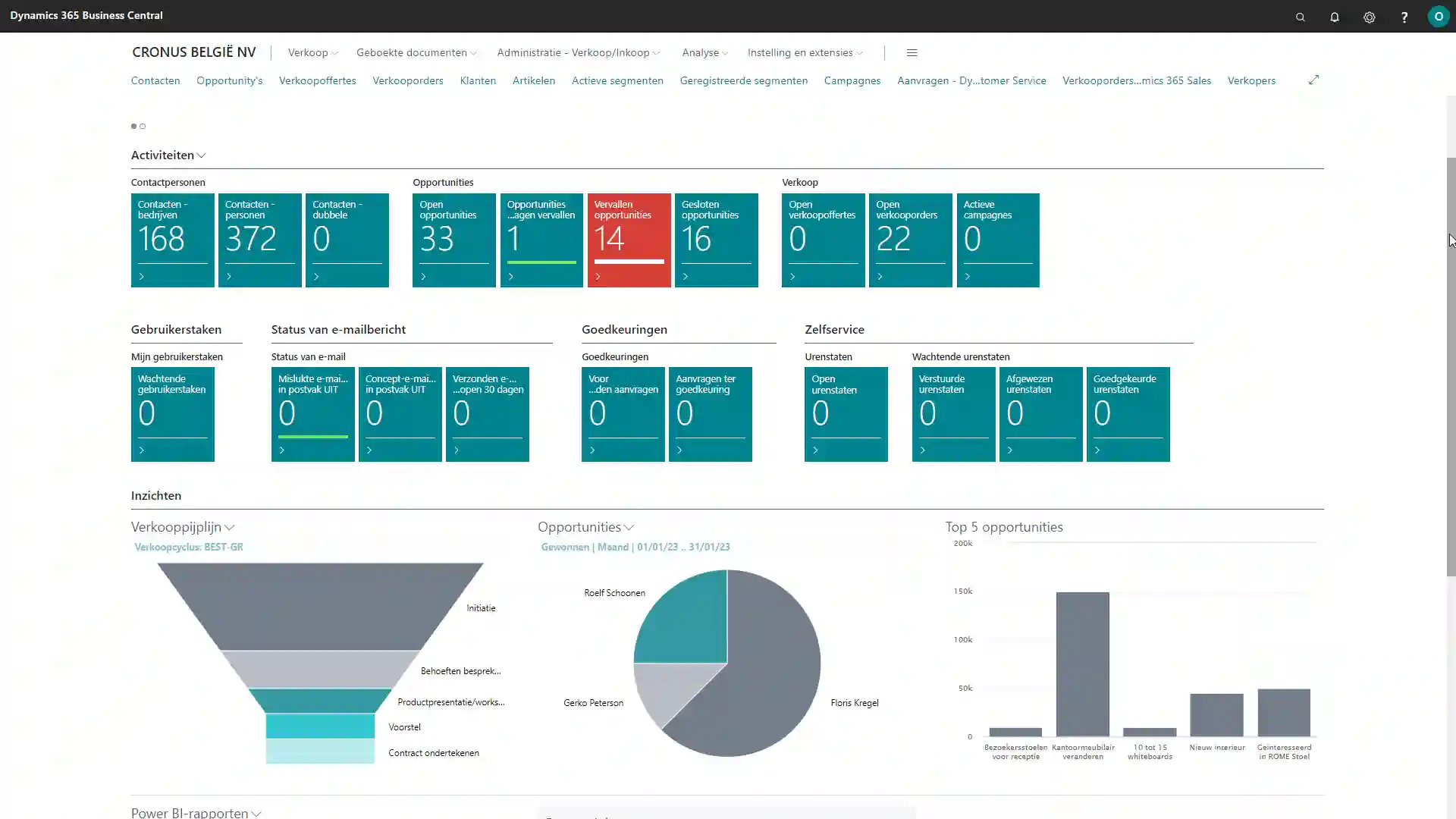

Rental software usually focuses on one core function or app: managing rental activities. Consider:
While useful, the functionality is often limited to the operational process.
An ERP (enterprise resource planning) goes much further and bundles:
Everything works with the same database, eliminating errors and making processes seamless.
In smaller systems, you often enter data multiple times: items, prices, customer data, contracts or inventory records.
This leads to:
With an ERP, you work with real-time and integrated data everywhere, so planning, administration, work preparation and maintenance teams always see the same information.
Result: fewer errors, higher reliability and faster processes.
A rental business rarely stays the same. You add equipment, open new branches, set up additional services or expand into maintenance, transportation or sales.
Rental software and apps often can’t handle that growth-ERP can.
A modern ERP solution scales without limitations.
In many rental companies, administration still performs many manual tasks:
An ERP makes this process fully automated, including:
For management, this is golden: one system provides complete financial insight and reporting without Excel work.
Stand-alone rental software often has limited maintenance modules. But with rental companies, service and maintenance is at least as important as the rental itself.
ERP offers standard:
As a result, the availability of your rental fleet goes up, while maintenance costs go down.
A rental fleet is capital intensive. So you want to know exactly:
In rental software, this is usually limited. In ERP, a complete 360° view emerges because financial data, maintenance data and rental data are linked.
ERP ensures seamless processes, less duplication, more overview. And fewer problems.
Many companies work with:
Every linkage is a risk. And any update can break that link.
ERP replaces all these separate systems with one integrated solution. That means:
It is not only easier, but also safer.
Although ERP may initially seem more expensive than a simple rental software, at the bottom line it is almost always cheaper.
That’s because of:
Downtime costs in particular drop because ERP perfectly aligns maintenance, scheduling and rental.
With an ERP, you lay a scalable, stable and efficient foundation for your entire organization. Rental companies that choose ERP right away experience:
In short, ERP makes rental companies data-driven, efficient and profitable.
Those who choose rental software are usually limited to the short-term operational side. And yes, that is cheaper financially in the short term. But as you grow, you will run into limitations. And you will have to make new investments where you may lose your initial investment, or where your employees will have to learn a system all over again.
Those who choose ERP take their entire business to the next level:
✔ O ne truth across all processes
✔ Seamless integration of rental, logistics, finance and service
✔ Better control, insight and profitability
✔ Less IT complexity and lower structural costs
✔ Ready for growth, innovation and digitization
For any rental business owner thinking strategically ahead, ERP is not a luxury-it is a necessity for scalability and success.
[1] Gartner. Strategic Justification for Industry-Specific ERP Systems vs. Generic Software. [2] McKinsey & Company. The Value of End-to-End Integration: Breaking Down Silos with Unified ERP. [3] European Rental Association (ERA). Adoption Trends: The Shift Towards Full-Featured Rental ERP Solutions. [4] Academic Research. The Role of a Centralized Database in Minimizing Data Discrepancies and Revenue Leakage. [5] Harvard Business Review (HBR). Improving Organizational Agility Through Real-Time Data and Integrated Systems. [6] Journal of Operations Management. Efficiency Gains from Unifying Financials, Logistics, and Asset Management within One System. [7] BCG (Boston Consulting Group). Digital Transformation Architecture: The ERP as the Core Digital Platform. [8] Deloitte Consulting. Reducing Total Cost of Ownership (TCO) by Consolidating Multiple Software Licenses into One ERP. [9] IT Research Institute. Scalability and Future-Proofing: ERP’s Advantage over Standalone Applications. [10] Software Industry Insight. The Criticality of Role-Based Access and Security in a Single, Integrated System. [11] Industry Best Practice. The Necessity of Automated Workflow Handoffs Between Departments (e.g., Sales to Logistics).

Contact
Every organization is different, and we at Offimac understand that all too well. Do you have questions or are you curious about what we can do for you? Let us know. We are happy to think along with you.


